

22 February 2019
Chris Duller, AgriPlan Cymru

An early spring has been on the wish list for many people, particularly those with limited forage or an eye on the straw price – the sooner animals can be out, the better. With a recent mild spell, and a settled forecast for a week or two there is certainly a good opportunity for some to go out early with fertiliser to boost grass supplies. Early nitrogen applications are all about getting a good response and minimising the risk of losses.
These are the basic rules for early season nitrogen:-
- Pick the right fields. Dry, south facing, young leys, 50% or more ryegrass, no major soil damage. With these fields you should get a response of at least 10 to 1; so 10kgDM of grass for every kg of nitrogen you apply. With current nitrogen prices, plus spreading costs your nitrogen is costing around £1/kg – so spring grass costs 10p/kgDM to grow. As long as you utilise more than 50% then its way cheaper than feeding cake.
- Don’t make a mess putting fertiliser out. If you’re making wheel marks you shouldn’t be there – and there’s a high risk that your nitrogen will be wasted. Low tyre pressures and double wheels can obviously help, but if it’s a wet field – what are the chances of grazing it properly in two or three weeks’ time if it turns wet? I’d rather you waited for better ground conditions.
- Make sure soil temperatures are higher than 5 degrees C. Ideally go and buy yourself a soil thermometer – about £10 – otherwise check out the farming connect soil temperature map online to get a rough ideas of temperatures in your area. Research has shown that for every additional degree above 5 degrees, nitrogen recovery increases by around 5% in early spring (Murphy et al 2013).
-
Don’t apply too much in one hit. 30kgN/ha in one go would be my recommendation for late February, so about 25units/acre. Increase the rate and you increase the risk of losses.
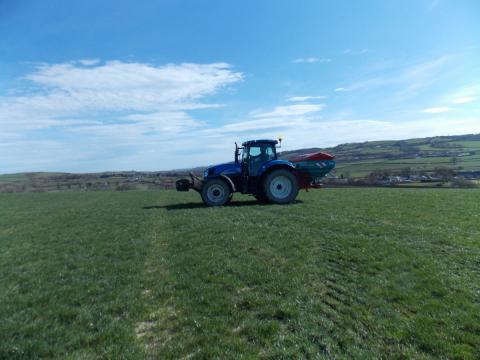
- Product choice. Urea is perfectly suited to cold and wet conditions, but losses of nitrogen as ammonia increase massively once air temperatures get into double figures. If urea is all you’ve got, then spread it in the evening, ideally in a light drizzle – the greatest period of loss is the first 12 hours after spreading. If they are forecasting 14 degrees plus…it’s not a day for spreading urea.
- Don’t forget that phosphate supply is strongly linked to early grass growth – so make sure that any fields at Index 1 or low Index 2 get a bit of phosphate – products like 25:10:0 are ideal.